
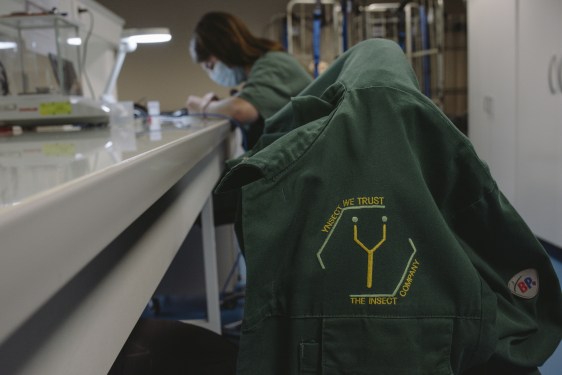
The French startup Ÿnsect shot into the spotlight when actor Robert Downey Jr. touted its merits on a late-night talk show in early 2021. Now, nearly four years later, the insect farming company has been placed into judicial liquidation, essentially bankruptcy, for insolvency.
The company’s demise is hardly a surprise, as Ÿnsect had been embattled for months. Still, there is plenty to unpack about how a startup can go bankrupt despite raising over six hundred million dollars from investors, including Downey Jr’s venture fund, taxpayers, and many others.
Ultimately, Ÿnsect failed to fulfill its ambition to revolutionize the food chain with insect-based protein. But its failure should not be quickly attributed to the reluctance some consumers feel about bugs. Human food was never its core focus. Instead, Ÿnsect focused on producing insect protein for animal feed and pet food, two markets with very different economics and margins that the company never quite chose between.
That indecision extended to its acquisition strategy. In 2021, Ÿnsect acquired a Dutch company raising mealworms for human food applications, adding a third market to the mix. Even as the company announced the deal, its then-CEO admitted it would take years for human food to represent just a small fraction of revenue, while pet food and fish feed would remain the largest contributors. In other words, Ÿnsect was acquiring a company in a market segment that would remain marginal for years at a time when the startup desperately needed revenue growth.
Revenue was the central problem. According to publicly available data, Ÿnsect’s revenue from its main entity peaked at a modest figure in 2021, a figure reportedly inflated by internal transfers between subsidiaries. By 2023, the company had racked up a net loss of tens of millions of dollars.
So how did a company with such meager revenue raise over six hundred million dollars? The answer was not hype-driven funds. Instead, Ÿnsect attracted impact-focused investors that bought into a compelling sustainability vision. Its pitch was offering an alternative to resource-intensive proteins like fishmeal and soy. That same thesis also attracted significant capital to competitors, and it seemed promising.
But the vision collided with market reality. Animal feed is a commodity market driven by price, not sustainability premiums. In practice, factory-scale insect production typically ends up relying on cereal byproducts that are already usable as animal feed, meaning insect protein just adds an expensive extra step. For animal feed, the math simply was not working.
Ÿnsect eventually recognized this. Pet food proved to be a different equation, being less price-driven and a far better market for insect protein. By 2023, the company refocused its strategy on pet food and other higher-margin segments, citing broader economic pressures.
The 2023 pivot to pet food came too late. By then, Ÿnsect had already committed to a massive, capital-intensive bet that would ultimately doom the company. That bet was a “giga-factory” in Northern France billed as the world’s most expensive bug farm. Built for insect production at scale, the facility consumed hundreds of millions in funding before Ÿnsect had proven its business model or figured out its unit economics.
To oversee the factory’s launch, Ÿnsect brought in a former executive from a French energy giant. When the move to pet food failed to save the company, that executive replaced the founder as CEO. Ÿnsect then shut down another production plant and cut jobs. But shuttering one facility while operating a giga-factory built for the wrong market could not solve the fundamental problem.
For one business school professor, Ÿnsect’s struggles are not a mystery mainly about insects. They are the result of a mismatch between industrial ambition, capital markets, and timing, compounded by some execution and strategy choices.
The fact that Ÿnsect failed does not mean the entire insect farming sector is doomed. A competitor is reportedly holding up better, in part because it started with a smaller production site and is ramping up incrementally.
For that professor, Ÿnsect exemplifies a broader European problem of funding ambitious projects but underfunding the factories and industrialization needed to make them viable, a pattern seen in other failed deep-tech startups.
The failure has prompted some soul-searching. The company’s founder has since co-founded an association advocating for policies to support French industrial startups, a recognition that Europe needs more than just funding to build the next generation of companies.