
Parts of San Rafael, a city just north of San Francisco, are sinking about half an inch per year. While that might not sound like much, the cumulative effect has meant that some neighborhoods, like the Canal District that borders the bay, have sunk three feet. This places them at a much greater risk of flooding from sea level rise.
San Rafael is not alone in this challenge. Cities around the world are threatened by rising sea levels, with an estimated 300 million people at risk of routine flooding by the year 2050. The cost of building seawalls to hold the waters back could exceed 400 billion dollars in the United States alone.
A new startup named Terranova is proposing an alternative solution: raise the city instead. The company is building robots that will inject a slurry made from wood waste into the ground. This process would slowly lift the land to eliminate historical subsidence and, hopefully, prevent those vulnerable parts of the city from flooding.
Laurence Allen, co-founder and CEO of Terranova, explained the situation. He stated that the Canal District is already far under sea level and that the city’s consultations for a solution consistently pointed to seawalls costing between 500 million and 900 million dollars, a sum the city cannot afford. He noted that San Rafael has about 60,000 residents, with a significant portion living in poverty.
Terranova claims it can protect San Rafael and other similar cities for a fraction of the cost. For San Rafael’s case, the startup has quoted 92 million dollars to lift 240 acres of land by four feet.
The company recently raised 7 million dollars in a seed funding round. This oversubscribed round values the company at 25.1 million dollars.
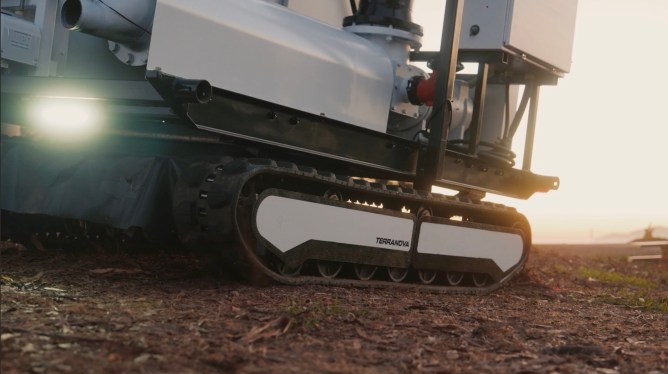
The concept of lifting land by injecting material underground is not new. However, Terranova’s approach involves novel techniques that aim to make the process cheaper. The first innovation is the material itself. The company uses inexpensive and readily available wood waste, which it mixes with other undisclosed materials to create a slurry. This slurry is then pumped from a shipping container to the second cost-saving component: a robotic injection device. These tracked robotic units move autonomously around a work site, drilling wells to deliver the wood slurry to depths between 40 and 60 feet.
The company states that so long as the slurry remains wet underground, the wood should not decay. This allows the company to sell carbon credits to help offset project costs. All of this is managed by proprietary software that uses public geographic information and geological data to create a model of the subsurface. A genetic algorithm then determines the optimal injection patterns.
On the backend, city planners and other stakeholders can use a SimCity-like tool to virtually sculpt the landscape. Once plans are finalized, they guide the robotic injectors, telling them exactly where to go and how much slurry to inject. Human operators remain on site as a safety precaution. After injection, it takes about two hours for the slurry to consolidate. Terranova has been testing both the robots and the software at a pilot site for over a year.
Some experts have questioned whether the consolidated wood slurry could exacerbate earthquake shocks. In response, Allen said that the most frequently mentioned alternatives also carry risks, and he believes their method will be more helpful than dikes and seawalls in an earthquake scenario.
The company plans to make money by sharing project revenue with contractors. It hopes the low costs will make the process attractive for a range of land-lifting projects beyond cities, including remediating wetlands that are disappearing due to subsidence or sea level rise. But given the urgency of rising waters, cities remain Terranova’s first priority. Allen, who is from San Rafael, expressed a personal motivation, saying he really wants to save the city.