
Mill may have started with households, but co-founder and CEO Matt Rogers says the food waste startup has long aspired to expand to commercial customers. This has been part of the company’s plan since its Series A funding round.
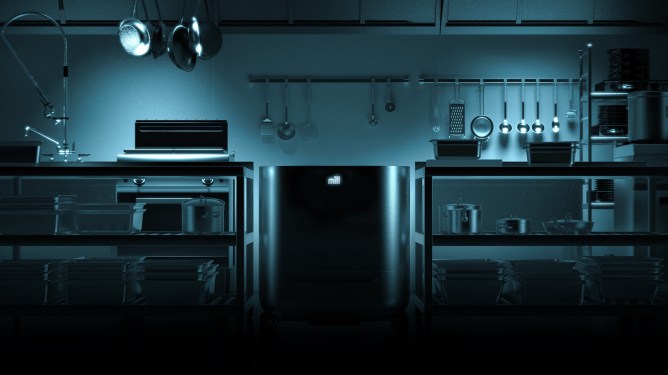
Now, with an official deal locked in with Amazon and Whole Foods, the company’s plan to profit from handling other people’s food waste is more public. Whole Foods will deploy a commercial-scale version of Mill’s food waste bin in each of its grocery stores beginning in 2027. The bins will grind and dehydrate waste from the produce department. This process reduces costly landfill fees while also providing feed for the company’s egg producers, trimming overhead.
At the same time, Mill’s bins will collect data to help Whole Foods understand what gets wasted and why, helping the grocer further control costs. Ultimately, the goal is not just to make waste operations more efficient, but also to move upstream so they actually waste less food.
The company started selling food waste bins to households a few years ago. As can be expected from a team that made the Nest thermostat, the devices are well designed. Starting with consumers was very intentional because it builds proof points, data, brand, and loyalty. Many members of the Whole Foods team were already using Mill in their homes when the two companies started talking.
It is actually part of the enterprise sales strategy. The company has conversations with senior leadership at ideal customers and suggests they try Mill at home to see what their family thinks. This is a surefire way of getting folks excited.
The startup began having conversations with Whole Foods about a year ago. In the ensuing months, Whole Foods trialed the consumer version in some of its stores. Mill used feedback from Whole Foods to refine its commercial model. But what helped seal the deal was Mill’s ability to pinpoint food waste before it was wasted. Mill has developed an AI that uses a range of sensors to determine whether food that enters the bin should still be on the shelf. Minimizing shrink, the industry’s term for sales lost through waste or theft, can give grocers an edge in a cutthroat market.
Advances in large language models have been key. When the founders were at Nest, it took dozens of engineers and significant resources over a year to train cameras to recognize people and packages. With new LLMs, Mill only needed a handful of engineers and far less time to deliver superior results. AI is a huge enabler.
The use of AI allowed Mill to deliver a commercial version faster, diversifying its customer base and source of revenue. If you are a single channel, single customer business, you are fragile. Rogers, who grew up at Apple during the iPod era, noted that Apple was a single leg business at that time. This was why they developed the iPhone, to build another leg of the stool.
And it seems that Mill is not finished adding legs to its figurative stool. Rogers said the company is working on building out a municipal business as well. They are continuing to add more legs to the stool and adding more diversity to the business.