
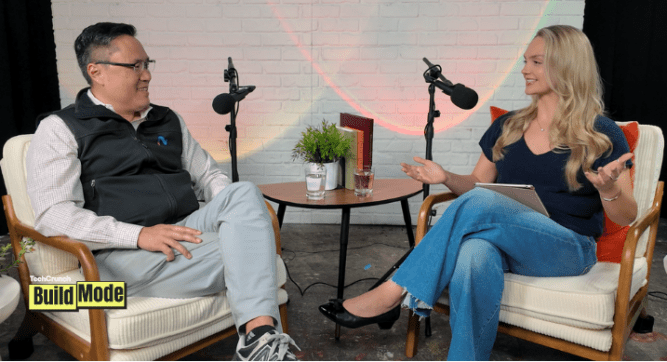
David Park is no stranger to the startup world. As a veteran founder and TechCrunch Startup Battlefield alumnus, he is well-tested in the enterprise arena. On the Build Mode podcast, Park joined Isabelle Johannessen to discuss how he and his team are intentionally iterating, fundraising, and scaling Narada. This enterprise AI solution uses large action models to automate complex, multi-step workflows across various business systems.
On the surface, Narada seems designed to attract investor attention. It boasts a dream founding team of experienced researchers and operators from Stanford and Berkeley, along with big-name enterprise customers and a functional product. So when Narada applied for Startup Battlefield in 2024, the team was surprised by how little fundraising they had actually done. That decision, however, was deliberate.
Park explained their cautious approach to funding. He believes that having too much money before achieving product-market fit can lead a company to spend on things that do not help it evolve correctly. It removes the friction that prevents costly mistakes. Park previously founded and exited Coverity, and that experience taught him a crucial lesson he brought to Narada: take the time to talk to your customers before anything else.
In the early days, Park and his co-founders avoided reaching out to venture capitalists. Instead, the three of them made over one thousand customer calls to deeply understand the pain points. Once the problem was extremely clear, the solution came into focus. These teams needed an AI product they could speak to like a person and trust to handle multiple steps at once.
Park advises founders to ask the hard questions and spend genuine time with customers, not just in selling. He views the initial contract as just the beginning of the relationship. Some of those early bootstrapped customers ultimately turned into multimillion-dollar deals. It is always easier to sell more to a company that has already chosen you and established trust.
As a seasoned founder, Park holds a foundational belief: to build a company correctly, the customer must be at the center of every decision. No matter how trendy, interesting, or well-received a product is by the industry, if people will not pay for it, it will not be a winner.