
A few years ago, Selina Tobaccowala’s daughter began leaving post-it notes around their house with reminders to turn off the lights. Tobaccowala had just sold her previous startup, Gixo, to OpenFit and was searching for a new challenge. Inspired by her children, she decided to explore opportunities in sustainability and climate action. She knew there had to be more to it than simply turning off lights.
Without a background in climate science or hardware engineering, she was unsure where to begin. She turned to a tool she knew well from her time as president and CTO of SurveyMonkey: surveys. Tobaccowala surveyed a large number of potential customers. She discovered a common frustration: people received emails comparing their utility bills to their neighbors but felt stuck on what to actually do about it.
This insight led her to co-found HomeBoost, a company designed to help people conduct their own home energy assessments. The company was selected as part of the Startup Battlefield 200 at TechCrunch Disrupt 2025.
The HomeBoost process starts when customers receive a BoostBox in the mail. This kit contains an infrared camera, a blacklight, and a link to an app that guides them through the assessment. Walking through their home, the infrared camera reveals where cold or hot air is leaking, while the blacklight identifies lights that could be upgraded for efficiency.
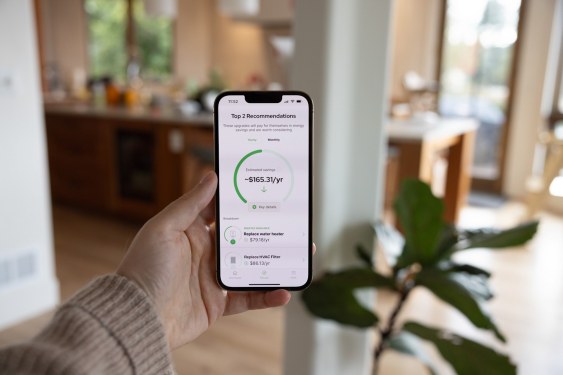
The app then uses data from these scans to generate a report. This report suggests the most cost-effective upgrades and includes available rebates based on the customer’s location. While many utilities offer similar assessment services, Tobaccowala found the quality inconsistent, with many consumers feeling the auditors were just trying to sell them an upgraded HVAC system.
HomeBoost aims to be a cheaper and faster alternative that puts customers in control. The service costs $99, roughly a quarter of the price of a traditional in-person assessment. HomeBoost also partners with utilities, which cover part or all of the cost for their customers. The startup has agreements with Central Hudson, Omaha Public Power District, and Avista. For example, Omaha Power reduces the cost to the customer to just $19, while Central Hudson offers the BoostBox for free through public library checkouts.
Recognizing that not every homeowner wants to do the assessment themselves, and that not all professional auditors are pushy, HomeBoost also developed a version of its app for energy professionals. This allows auditors to serve more customers efficiently. Additionally, the company is testing a feature to connect homeowners with contractors who can perform the recommended upgrades, giving contractors valuable project information before they even visit a home.
By connecting consumers, utilities, and contractors, Tobaccowala believes HomeBoost can achieve meaningful climate impact. She notes it is a unique situation where everyone is aligned to lower utility bills, which ultimately results in a positive improvement for the climate.