
Another promising AI startup has seen its top talent recruited by a larger player. As part of a new licensing agreement, Google DeepMind is bringing on the CEO and several top engineers from voice AI startup Hume AI. The remaining part of Hume AI will continue to supply its technology to other firms. No financial details of the deal were shared.
CEO Alan Cowen and approximately seven other engineers will work with DeepMind to improve the voice features of Gemini. This move is the latest example of a leading AI firm acquiring a startup’s team rather than the entire company, a tactic that often skirts regulatory scrutiny. Last year, Google acquired the CEO and top researchers from the viral AI coding startup Windsurf. Similarly, OpenAI has acquired several startup teams in recent months.
The Federal Trade Commission has recently stated it will take a closer look at such talent acquisition deals. This event also highlights that voice is becoming the next major frontier in AI competition.
Hume AI’s key innovation is its model’s ability to understand a user’s emotions and mood from their voice. In 2024, the startup launched its Empathetic Voice Interface, a conversational AI with emotional intelligence. Hume AI has raised close to $80 million to date and expects to bring in $100 million in revenue this year.
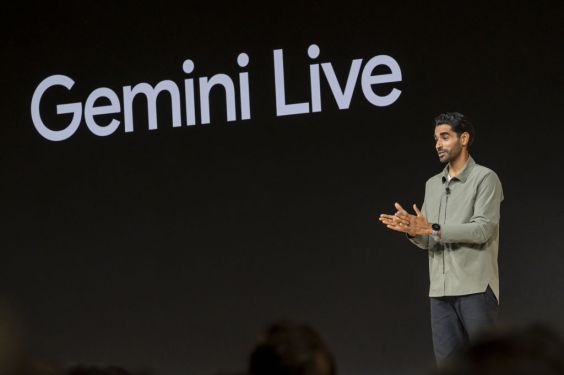
Hume AI is not the only company advancing voice-focused models. Google has been steadily improving its Gemini Live feature, which allows for conversational interactions. Last month, Google released a new native audio model for the Live API to better handle complex workflows.
Others in the industry are also investing heavily in voice capabilities. OpenAI is reportedly preparing to overhaul its audio models for an audio-first personal device created with Jonny Ive’s company, set to launch this year. Recent leaks suggest the device could be a form of earbuds.
Last year, Meta accelerated its AI audio push by acquiring startup Play AI. Its Ray-Ban smart glasses increasingly rely on voice and audio for tasks like enhancing conversations in noisy rooms and enabling hands-free control.
An investor noted that voice is the only acceptable input mode for wearables, and this acquisition will accelerate the need for voice applications. Demand for voice capabilities continues to grow. Earlier this month, AI voice generation startup ElevenLabs reported it crossed $330 million in annual recurring revenue.