
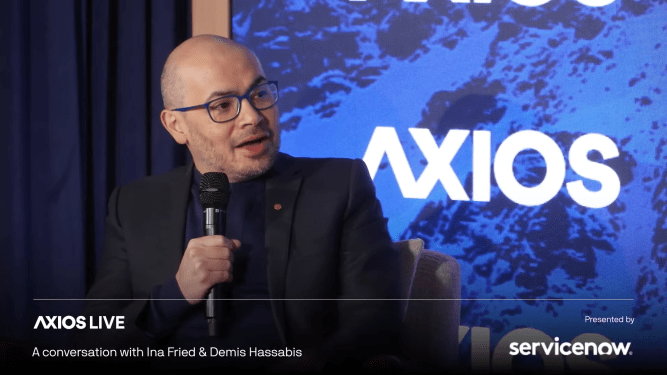
Google DeepMind CEO Demis Hassabis expressed surprise that OpenAI has already moved to introduce ads within its AI chatbot. In an interview at Davos, the AI leader responded to a question about monetizing AI services with ads, stating that his team at Google is thinking through the idea very carefully. Hassabis said his team was not feeling pressure from the tech giant to make a knee-jerk decision around advertising, despite ads being central to Google’s core business.
These remarks followed the news that OpenAI will begin testing ads as a way to generate additional revenue from the portion of its AI chatbot’s 800 million weekly active users who do not have a paid subscription. While OpenAI may have been forced to consider ads due to its growing infrastructure and energy costs, its decision could change how users view the service.
Hassabis said he was a little surprised they moved so early into that space. He clarified that there is nothing wrong with ads, as they funded much of the consumer internet and can be useful if done well. But he questioned how ads fit into the model of a chatbot assistant that is meant to be helpful and work for the individual. He emphasized the importance of trust in an assistant and wondered how advertising aligns with that.
Reiterating earlier comments from another Davos interview, Hassabis also said that Google currently has no plans to implement ads in its AI chatbot. Instead, the company will monitor the situation to see how users respond.
We have already seen consumer backlash to the idea of ads infiltrating conversations with AI assistants. When OpenAI last month began exploring a feature that suggested apps to try during users’ chats, people reacted negatively, saying these suggestions felt like intrusive ads. OpenAI later turned off the app suggestions, which it claimed were not actually ads as they had no financial component. However, user anger was not about money changing hands, but about how the suggestions degraded the quality of the experience. This is something that also concerns Hassabis.
He explained that using a chatbot is a much different experience than using Google Search. With Search, Google already understands a user’s intent and can show potentially useful ads. Chatbots, on the other hand, are meant to become helpful digital assistants that know about you and can help with many aspects of your life. He stated that this is very different from the search use case and needs to be thought through very carefully.
Making Gemini more useful to each user is also the focus of newly launched personalization features for Google’s AI Mode. Users can now opt into having Gemini’s AI tap into their Gmail and Photos for tailored responses in Search’s AI Mode. This is similar to how Gemini’s app recently added a Personal Intelligence feature that can reference users’ Gmail, Photos, Search, and YouTube history.
While personalized ad targeting sustains the free web, pushing an ad on a user while they are in a conversation with an AI assistant can feel off-putting. This is why customers rejected Amazon’s earlier attempts to infuse ads into its Alexa experience; they wanted an assistant, not a personal shopper hawking products.
Hassabis said he was not feeling top-down pressure to force ads into the AI product, though he admitted there may be a way to implement them correctly later on. He noted that his team does not feel any immediate pressure to make knee-jerk decisions, and that the history of their work at Google has been to be scientific, rigorous, and thoughtful about each step they take, whether in technology or product development.