
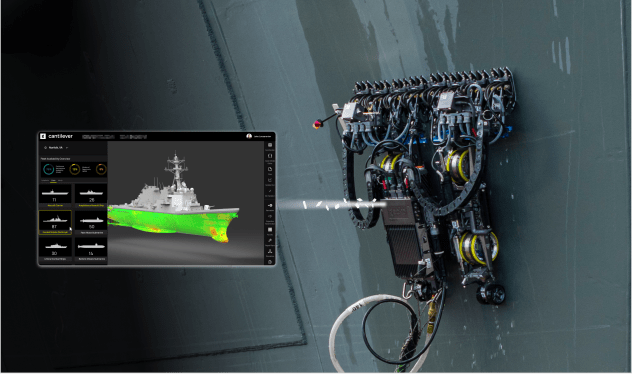
The U.S. Navy has signed its largest robotics contract to date as it seeks to use advanced technology to maintain its fleet. Pittsburgh-based Gecko Robotics has entered into a five-year agreement with the U.S. Navy and the U.S. General Services Administration. The deal begins with an initial award of $54 million and has a total potential value of $71 million.
Under this contract, the Navy will employ Gecko’s robots and sensors to monitor the condition and health of its ships, starting with 18 vessels in the U.S. Pacific Fleet. The company’s robots will meticulously crawl through every compartment of the ships to create a detailed digital replica, often called a “digital twin,” of each vessel. Specialized software will then analyze this data to recommend maintenance, aiming to predict problems before they occur and reduce both repair times and costs.
Gecko’s founder and CEO, Jake Loosararian, explained that creating this digital representation of an asset’s health and its environment allows for faster decision-making and repairs. The goal is to build a living model that reduces the number of days ships must spend out of service.
This initiative supports the Navy’s objective of achieving 80% ship readiness by 2027. Currently, about 40% of the fleet is unavailable at any given time due to lengthy maintenance cycles, which cost an estimated $13 billion to $20 billion annually. Loosararian emphasized the critical need for every available asset, noting that these vessels are not getting any younger.
Gecko has collaborated with the U.S. Navy for four years. The partnership began after a port engineer in Japan contacted the company, leading to an evaluation and a preventative maintenance plan. The Navy was satisfied with the results, and the relationship expanded to this new agreement.
The company’s vision is to ensure critical assets remain operational for as long as possible. Loosararian envisions a future where ships do not undergo prolonged maintenance cycles because issues are identified and addressed while they are still deployed, whether those assets are military vessels or industrial facilities like power plants.