
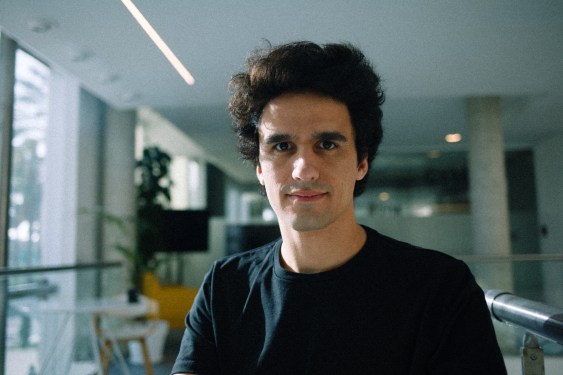
An AI lab called Fundamental emerged from stealth on Thursday, offering a new foundation model to solve an old problem: how to draw insights from the huge quantities of structured data produced by enterprises. By combining the old systems of predictive AI with more contemporary tools, the company believes it can reshape how large enterprises analyze their data.
CEO Jeremy Fraenkel explained that while large language models have been great at working with unstructured data like text, audio, video, and code, they do not work well with structured data like tables. With its model called Nexus, Fundamental has built what it calls the best foundation model to handle that type of data.
The idea has already drawn significant interest from investors. The company is emerging from stealth with 255 million dollars in funding at a 1.2 billion dollar valuation. The bulk of this comes from a recent 225 million dollar Series A round led by Oak HC/FT, Valor Equity Partners, Battery Ventures, and Salesforce Ventures. Hetz Ventures also participated in the Series A, with angel funding from Perplexity CEO Aravind Srinivas, Brex co-founder Henrique Dubugras, and Datadog CEO Olivier Pomel.
Called a Large Tabular Model rather than a Large Language Model, Fundamental’s Nexus breaks from contemporary AI practices in significant ways. The model is deterministic, meaning it will give the same answer every time it is asked a given question, and it does not rely on the transformer architecture that defines models from most contemporary AI labs. Fundamental calls it a foundation model because it goes through the normal steps of pre-training and fine-tuning, but the result is something profoundly different from what a client would get when partnering with other leading AI labs.
These differences are important because Fundamental is chasing a use-case where contemporary AI models often falter. Transformer-based AI models can only process data within their context window, so they often have trouble reasoning over extremely large datasets, like analyzing a spreadsheet with billions of rows. That kind of enormous structured dataset is common within large enterprises, creating a significant opportunity for models that can handle the scale.
Fraenkel sees this as a huge opportunity. Using Nexus, the company can bring contemporary techniques to Big Data analysis, offering something more powerful and flexible than the algorithms currently in use. He stated that you can now have one model across all your use cases, massively expanding the number of problems you can tackle, and on each one of those use cases you get better performance than what you could achieve with an army of data scientists.
That promise has already brought in a number of high-profile contracts, including seven-figure deals with Fortune 100 clients. The company has also entered into a strategic partnership with AWS that will allow AWS users to deploy Nexus directly from their existing instances.