
Ford is promising to deliver an electric truck next year with a starting price of $30,000, a vehicle designed to compete with Chinese automakers while maintaining healthy profit margins. The company stated on Tuesday that a combination of 3D-printed Lego-like parts, Formula 1 engineering principles, and an internal bounty program will be key to hitting that ambitious target. This new strategy is critical for Ford, which absorbed a $19.5 billion loss in December and ended production of its battery-electric F-150 Lightning. The company cannot afford for this new EV initiative to fail.
The bet on an affordable EV line began several years ago with a skunkworks team led by Alan Clarke, a veteran of Tesla with twelve years of experience. Parts of the plan emerged last August when Ford announced it would abandon its traditional moving assembly line and invest $2 billion to retool its Louisville factory. This new production system promises to speed up manufacturing by 15 percent. At that time, Ford revealed its new EVs would be built on a universal platform using single-piece aluminum unicastings—large components cast as one piece to reduce parts and accelerate assembly—and would utilize lithium iron phosphate battery technology licensed from China’s CATL.
Now Ford is providing more specific details on how it plans to fulfill its promise of a desirable EV truck priced $20,000 below the average new vehicle while still turning a profit. While specifications like range, features, or charging times were not shared, Ford did explain its approach to building lighter, cheaper, and more efficient vehicles with fewer components.
The foundation is the universal EV platform, or UEV. This platform will first underpin a midsized truck, and could later support a sedan, a crossover, a three-row SUV, and even small commercial vans, according to Clarke. The UEV represents Ford’s first “clean sheet” EV designed from the ground up, a strategic shift from the Mustang Mach-E and Lightning, which were built using existing infrastructure and practices.
Clarke described the platform as being built around efficiency and affordability, aiming to make long-range electric travel accessible to more people. To achieve this, Clarke cultivated a new team culture by recruiting talent from Formula 1 and companies like Apple, Lucid Motors, Rivian, and Tesla, as well as from the startup Auto Motive Power, which Ford acquired in 2023. This team, with about 450 people in Long Beach, California, and 200 in Palo Alto, also implemented a bounty program. This program helps engineers understand how their daily decisions impact the customer and the final product by assigning numerical metrics to every aspect of the UEV, from vehicle mass to aerodynamic drag to individual parts. The goal is efficiency, which sometimes means using a more expensive part if it significantly reduces weight and improves overall cost-effectiveness.
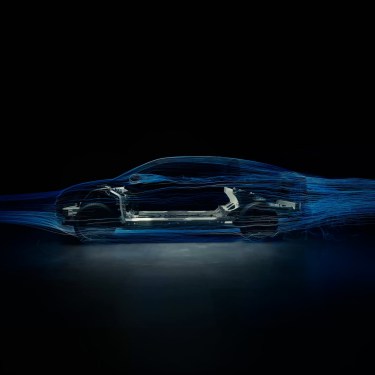
This obsession with efficiency included a team of ex-Formula 1 engineers who collaborated closely with Ford’s designers. Ford claims the result is a midsized EV truck that is 15 percent more aerodynamically efficient than any other pickup on the market today. This team used thousands of 3D-printed, Lego-like components to build test vehicles. These precise, swappable parts allowed for frequent wind tunnel testing early in the design process, a departure from Ford’s traditional practice of testing only near the end of development.
A major focus was the battery, which can represent about 40 percent of a vehicle’s total cost. A lighter, more efficient vehicle allows for a smaller, less expensive battery. Clarke stated the end result will be an EV truck with roughly 15 percent more range, or about 50 extra miles, compared to an equivalent gas-powered pickup.
The push for efficiency also led the team to adopt manufacturing tactics popularized by Tesla, such as aluminum unicastings and a shift from a 12-volt to a 48-volt power system for some vehicle functions. Ford also redesigned the EV architecture using a zonal approach similar to Tesla and Rivian. Instead of dozens of electronic control units scattered throughout the vehicle, Ford integrated functions into five main modules. This reduces complexity, cost, and copper usage, making the truck’s wire harness 4,000 feet shorter and 22 pounds lighter than in Ford’s first-generation electric vehicles.
This philosophy extended to power electronic components, where Ford created a single module to manage power distribution, battery management, and even provide backup AC power to a home during an outage. Furthermore, Ford developed its own software for these five main control units down to the application layer. Clarke explained that because Ford owns the software at this fundamental level, it becomes highly portable and allows for direct control over all vehicle systems, enabling unique customer experiences by coupling sensors and functions throughout the vehicle.