
Finnish startup NestAI has raised 100 million euros in a funding round led by Finland’s sovereign fund, Tesi, and hardware giant Nokia. The investment will be used to build AI products for unmanned vehicles, autonomous operations, and command and control platforms.
NestAI has also formed a strategic partnership with Nokia to develop AI products for defense applications. Together they will work on physical AI, which involves using large language models and related technology for robotics and other real-world applications.
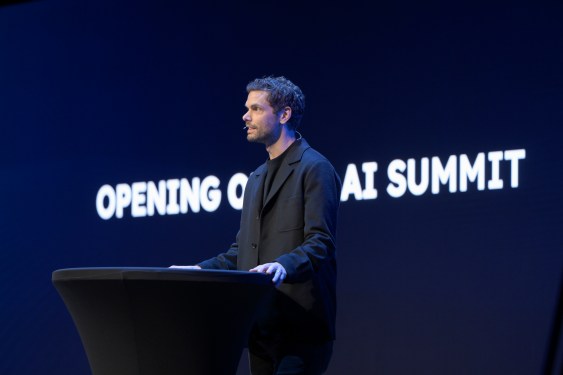
The funding will help NestAI build what it calls Europe’s leading physical AI lab, as stated by co-founder Peter Sarlin at the Slush 2025 technology conference in Helsinki. Physical AI is a growing research field for both large tech companies and startups. This funding round demonstrates there is space for European companies to develop homegrown solutions that address the continent’s specific needs, which have increasingly leaned toward defense applications due to the prolonged Ukraine-Russia war. Last month, the startup announced it would support the Finnish Defense Forces in adopting AI.
This focus on technological sovereignty may explain why NestAI has operated in stealth mode until now. The company is now building in public, supported by Sarlin, who has been funding the venture through his family office, PostScriptum. Sarlin stated that NestAI has from the start set out to become Europe’s leading physical AI lab to drive technological sovereignty. He noted this partnership marks an important step in securing Europe’s defense capabilities and sovereignty.
After selling his previous AI startup, Silo AI, to AMD for 665 million dollars last year, Sarlin has been active as a philanthropist and investor, backing other startups. While he is building NestAI, his day job remains at AMD, and he will only act as the startup’s chairman, not its CEO.
NestAI does not currently have a CEO, but its growing team has attracted talent with experience in AI research and hardware projects that overlap with defense. A significant number of its staff previously worked for Intel, while others were formerly employed by companies like Kongsberg, Palantir, and Saab.