
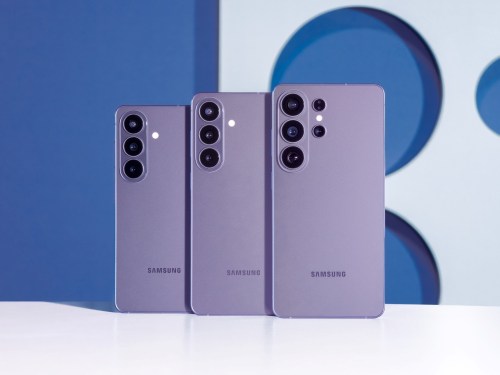
Samsung’s Galaxy Unpacked event in San Francisco this Wednesday featured the Korean tech giant unveiling its new S26 series of smartphones and a pair of new earbuds. A significant focus of the presentation was on advancements in AI assistants and agents. Here is a complete recap of all the announcements from the event.
The company introduced three new smartphones for the year: the Galaxy S26 Ultra, the Galaxy S26 Plus, and the standard Galaxy S26. All three models feature iterative updates over their predecessors. As the flagship device, the S26 Ultra is equipped with Qualcomm’s latest Snapdragon 8 Elite Gen 5 processor, a 6.9-inch QHD+ display, and a 5,000 mAh battery. Samsung states the phone can charge from zero to seventy-five percent in thirty minutes using a 60 W charger, and it continues to support the S-Pen stylus.
Regarding the cameras, Samsung noted that while the S26 Ultra’s wide 200-megapixel and telephoto 50-megapixel lenses retain the same pixel count as before, the new wide camera features a larger aperture of f/1.4. The telephoto lens also has a larger aperture, now at f/2.9. The S26 Plus and S26 share the same processor as the Ultra, though Samsung will use its own Exynos 2600 processor for these devices in some regions. The standard Galaxy S26 receives a battery capacity increase from last year’s model, and the S26 Plus can charge wirelessly at 20 W.
Pricing for the new phones has increased. The Galaxy S26 starts at $899, which is one hundred dollars more than last year’s model. The Galaxy S26 Plus starts at $1,099, also a one-hundred-dollar increase. The Galaxy S26 Ultra starts at $1,200.
A marquee feature for the Ultra model is a new privacy display technology. This update prevents people nearby from reading the content on the phone’s screen. Users can choose to hide specific parts of the screen, such as the notification area or password fields, or the entire display. This privacy setting can be configured individually for each application. Samsung also mentioned a maximum privacy protection feature that adjusts the screen’s contrast to further obscure content.
Google made two important announcements at the event. First, it previewed a new agentic version of Gemini that can perform multi-step tasks on a user’s behalf, such as hailing a ride or placing a food order from within a group chat. Second, Google introduced a new version of its Circle to Search feature, which now uses multi-object recognition to search for anything a user highlights on their screen.
On the AI front, Samsung confirmed a partnership with Perplexity to preload the AI company’s app on its smartphones. The partnership will allow Perplexity’s APIs to handle tasks like setting alarms and taking notes, and to power the browser’s search capabilities. This means Samsung smartphones now come with three AI assistants: Bixby, Google Gemini, and Perplexity. The company is also using its own Galaxy AI to screen calls and provide summaries of what a caller said.
Samsung also released two new earphones: the Galaxy Buds4 and the Galaxy Buds4 Pro. Both models feature a flatter stem design compared to their predecessors and carry IP54 and IP57 ratings for dust and water resistance. Samsung says the Buds4 Pro includes a new 11 mm woofer that widens the speaker area by twenty percent. The Pro models also offer a slightly longer battery life for the earbuds themselves compared to the regular version. The Galaxy Buds4 are priced at $179, while the Buds4 Pro cost $250.