
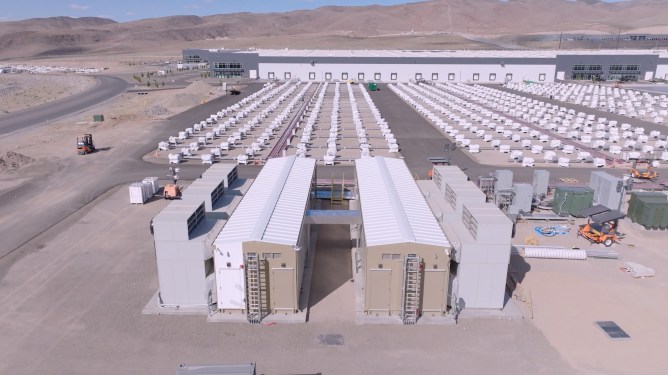
Nearly a decade ago, when the energy storage market was in its infancy, an industry organization set an ambitious goal: deploy 35 gigawatts of batteries connected to the U.S. grid by the end of 2025. The storage industry has not only met that goal but has surpassed it. In the third quarter of this year alone, 4.7 gigawatts of batteries were installed. In total, more than 40 gigawatts have been deployed, and the year is not yet over.
In just eight years, energy storage has transformed from a minor player into one of the largest sources of new power on the U.S. grid. Notably, battery storage constituted nearly half of all new renewable power added to the grid from July through September. This year, renewables have been the leading source of all new capacity.
Much of this new storage capacity has been built in Arizona, California, and Texas, states where electrical grids have faced significant strain in recent years. Experts believe the lessons learned in these regions can guide the deployment of battery storage in other areas, including the Midwest and East Coast, where grids are feeling pressure from new data center construction.
Startups are actively entering this expanding field. Redwood Materials, co-founded by former Tesla executive JB Straubel, launched a new business line in June focused on repurposing used electric vehicle batteries for grid-scale storage. The company identified two converging trends: batteries arriving at its recycling facilities still retained substantial usable life, while the grid storage industry was experiencing rapid growth. Redwood plans to deploy 20 gigawatt-hours worth of battery storage by 2028. Investors have shown strong support, providing an additional 350 million dollars to propel this new venture.
Another startup, Base Power, has taken a different approach by leasing batteries to homeowners and aggregating them to function as a large virtual power plant. The Austin-based company raised one billion dollars in October to build a battery factory and expand beyond Texas. It has already deployed more than 100 megawatt-hours of batteries within the state.
While lithium-ion batteries dominate current installations, other startups are pursuing alternative technologies to significantly lower storage costs. Sizable Energy is developing a novel method to store power in flexible reservoirs that float in the open ocean. Fourth Power uses blocks of carbon to store heat at extremely high temperatures and aims to deploy this technology by 2028 at a cost lower than lithium-ion batteries or natural gas peaker plants. XL Batteries is implementing its flow-battery technology at existing petrochemical storage sites, enabling the storage of hundreds of megawatt-hours. Cache Energy has created inexpensive pellets of calcium hydroxide that can store energy for months with minimal loss.
Together, these developments signal an industry in the midst of exponential growth. When paired with solar and wind, which remain the cheapest forms of new electricity, energy storage has the potential to fundamentally reshape global energy markets and the U.S. power grid.