
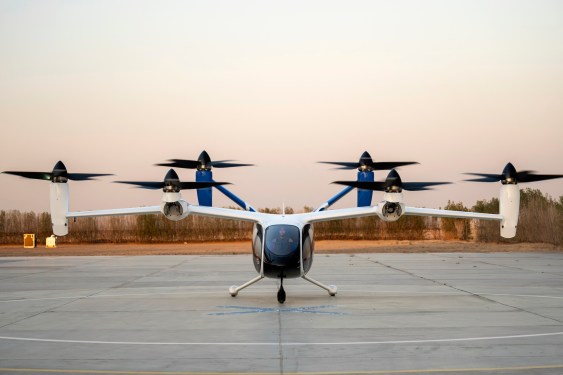
The Federal Aviation Administration has approved eight pilot programs, allowing a select group of companies to begin widespread testing of electric aircraft as early as this summer. The participating companies include Archer Aviation, Beta Technologies, Joby Aviation, and Wisk.
This three-year program will span 26 states. It is designed to ensure that U.S. companies lead the development of next-generation aircraft for personal travel, regional transportation, cargo logistics, and emergency medicine. The initiative is known as the Advanced Air Mobility and Electric Vertical Takeoff and Landing Integration Pilot Program. It was originally announced last year through an executive order aimed at speeding up the development of these futuristic aircraft.
In recent years, numerous electric vertical takeoff and landing companies have emerged with plans for urban air taxis and other regional electric aircraft. However, achieving commercial operation typically requires years and hundreds of millions of dollars, as the FAA must certify any new aircraft in a multi-year process. This new pilot program will allow companies to test their aircraft even before receiving full regulatory certification.
This accelerated timeline could bolster the efforts and share prices of many eVTOL companies that have gone public, such as Archer, Beta, and Joby. Beta Technologies’ founder stated that being selected will allow the company to start aircraft operations a full year earlier than anticipated. Following the announcement, Beta’s stock price rose nearly twelve percent, with Archer and Joby also seeing stock jumps.
Archer compared the program to robotaxi testing, saying it will help build trust and establish a playbook for safely scaling electric air taxis. The company, which is developing a four-passenger piloted eVTOL called Midnight, said it will also help prepare for air taxi operations in Los Angeles for the 2028 Olympic Games.
FAA officials stated that these partnerships will help understand how to safely integrate these aircraft into the National Airspace System, providing valuable operational experience to inform future safety standards. The FAA received thirty proposals for the program.
The pilot program requires companies to partner with state, local, tribal, or territorial governments. The projects cover several applications, including urban air taxis and regional flight. For example, the Port Authority of New York and New Jersey has partnered with Archer, Beta, Electra, and Joby to test operational concepts based out of a Manhattan heliport.
The Texas Department of Transportation will work with Archer, Beta, Joby, and Wisk to test regional flights connecting Dallas, Austin, San Antonio, and eventually Houston. This program includes building networks of air taxis to extend regional reach.
Some projects have widespread geographic implications. A project led by Utah will test next-generation aircraft and operational concepts across the Pacific Northwest, the Rocky Mountains, and the Plains of Oklahoma. Another project, led by the Pennsylvania Department of Transportation, will include thirteen states to revitalize regional flights across the country.
Other projects are focused on cargo delivery, medical response, and automation. Beta, Elroy Air, and others will test cargo and personnel transportation flights into the Gulf of Mexico and to energy industry locations in Louisiana, Texas, and Mississippi. Additional projects are being led by the departments of transportation in Florida, Louisiana, and North Carolina. The city of Albuquerque is also working with Reliable Robotics to test autonomous operations.