
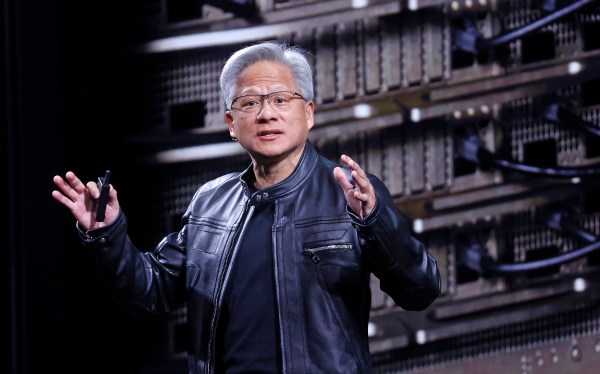
Advanced Nvidia AI chips may be headed to China after all. According to a report from Semafor, which cited sources, the Department of Commerce is planning to allow Nvidia to ship H200 chips to China. These chips are much more advanced than the H20 chips Nvidia developed specifically for the Chinese market. However, the report states the company would only be able to send H200s that are roughly 18 months old.
An Nvidia spokesperson told TechCrunch, “We applaud President Trump’s decision to allow America’s chip industry to compete to support high-paying jobs and manufacturing in America. Offering H200 to approved commercial customers, vetted by the Department of Commerce, strikes a thoughtful balance that is great for America.”
This news comes a week after U.S. Commerce Secretary Howard Lutnick said the decision on exporting these H200 chips to China was in President Donald Trump’s hands. A decision to send these chips would conflict with Congressional concerns about national security.
On December 4, Republican senator Pete Ricketts of Nebraska and Democratic senator Chris Coons of Delaware introduced a bill that would block the export of advanced AI chips to China for more than two years. The proposed Secure and Feasible Exports (SAFE) Chips Act would require the Department of Commerce to deny any export license for advanced AI chips to China for 30 months. It is unclear when legislators will vote on the bill.
While Congress has long been clear about restricting advanced AI chips to China, on both sides of the aisle, President Trump has waffled on whether to allow the exports. The Trump administration hit chip companies like Nvidia with licensing requirements to send their chips to China in April. It then formally rescinded a Biden administration diffusion rule that would have regulated AI chip exports in May. Over the summer, the U.S. government signaled that companies would be able to start sending chips to China as long as the government got a 15% cut of all revenue, as chips became a bargaining tool in trade talks with China.
However, by that point, the market for U.S.-developed chips in China was strained, if not permanently damaged. In September, China’s internet regulator, the Cyberspace Administration of China, banned domestic companies from buying Nvidia’s chips. This left companies in the country to rely on less advanced domestic chips from Alibaba and Huawei.