
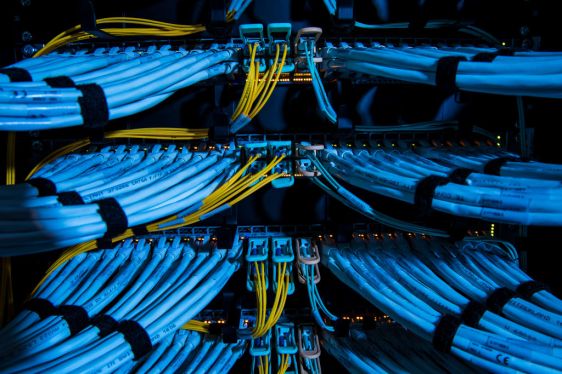
A new report from the International Energy Agency confirms the significant role data centers play in the global economy. This year, global spending on data centers will reach $580 billion, which is $40 billion more than the world will spend on new oil supplies. The agency noted this comparison is a telling marker of the changing nature of modern, highly digitalized economies.
The electricity consumption from AI data centers is projected to grow fivefold by the end of the decade, doubling the total amount of electricity used by all data centers today. While conventional data centers will also see an increase in energy use, that growth will not be nearly as dramatic.
Fully half of this new demand is expected to occur in the United States, with the bulk of the remainder taking place in Europe and China. Most new data centers are being developed in large cities with populations exceeding one million people. Half of the planned facilities are rated for at least 200 megawatts, and most are being built near other data centers.
This rapid build-out, especially in clusters around urban areas, presents challenges. Grid congestion and connection queues are increasing in many regions, and the wait times for new data center connections are often already long. In some markets, such as northern Virginia, grid connection waits can extend to a decade. In Europe, the city of Dublin has paused new interconnection requests entirely until 2028.
The supply chain for the electrical grid is another constraint. Cables, critical minerals, gas turbines, and transformers are causing delays for necessary upgrades. Some companies are developing solid-state transformers, which promise significant improvements over the century-old technology currently in use. These new transformers can integrate renewables more effectively, react swiftly to grid instabilities, and handle a range of conversions. However, the first deployments are at least a year or two away, and it will take time to ramp up production.
The IEA expects renewables to supply the majority of new data center power by 2035, regardless of whether countries maintain current policies or more aggressively pursue lower emissions. Solar power, which has seen significant cost reductions in recent years, has become a particular favorite of developers. Over the next decade, around 400 terawatt-hours of electricity for data centers will come from renewable sources, while natural gas will supply around 220 terawatt-hours. If small modular nuclear power plants deliver on their promises, the IEA expects they will contribute 190 terawatt-hours to data centers.