
Flatpay, which facilitates card payments for small and medium businesses, has joined the ranks of European fintech unicorns. This term refers to startups valued at more than one billion dollars. This milestone has driven some of the region’s biggest exits, including competitors like Adyen, a Dutch payment processing giant that remains far ahead in scale. However, Flatpay’s fresh funding could help it narrow the gap.
Flatpay’s strategy is to challenge larger players by charging small merchants a flat transaction rate to use its card terminals and point-of-sale systems. This focus on a segment that accounts for ninety-nine percent of European businesses has driven rapid traction. The startup now claims around sixty thousand customers, up from seven thousand in April 2024.
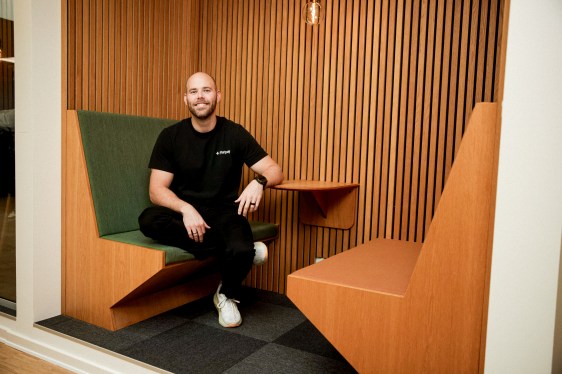
Flatpay’s own valuation has grown at a similarly fast pace. Now valued at 1.5 billion euros, the Danish startup reached unicorn status in only three years. But while CEO and co-founder Sander Janca-Jensen is proud of this accomplishment, he has his eyes on another metric, annual recurring revenue. He stated that the company crossed one hundred million euros of annual recurring revenue in October. He added that this amount is increasing by nearly one million euros a day. The plan for 2026 is to grow another three hundred percent, aiming to finish the year with between four hundred and five hundred million euros of annual recurring revenue.
To fund this ambitious growth, since the startup is still unprofitable, Flatpay raised 145 million euros in its latest round. The round was backed by AVP and Smash Capital, as well as Dawn Capital, which had led the startup’s earlier forty-seven million dollar Series B. German soccer player Mario Götze also participated in that previous round.
The newly raised capital will support continued growth in Flatpay’s current markets, which are Denmark, Finland, France, Germany, Italy, and the U.K., as well as further expansion into one or two new markets next year. Janca-Jensen declined to reveal which ones, but job postings suggest that the Netherlands may be next. Flatpay currently has fifteen hundred staffers, referred to as flatpayers, and plans to double that by the end of next year. Increasing headcount is a goal the company puts on the same level as revenue, stating that it aims to grow both by ten times by 2029. This may seem unusual, but they go hand-in-hand for the company, which onboards its customers in person.
This stems from its hypothesis that small and medium business owners actively look for new solutions, even if their current systems are overpriced or insufficient. The company literally comes to the door with pen and paper to explain its pricing and with card terminals for instant demos. Every salesperson carries a suitcase with a demo kit.
This hands-on approach is what might help Flatpay increase its share of a market that is also coveted by legacy providers, large fintech players like PayPal, Stripe, and SumUp, as well as new entrants focusing on specific sectors. But the real differentiator might be the insight behind it: small and medium businesses want simplicity, and Flatpay leaves them ready to go.
While this makes for higher customer acquisition costs than average, especially when combined with twenty-four seven customer support, creating demand allows the startup to grow much faster than it would otherwise. In turn, this triple-digit growth makes Flatpay’s emphasis on human interaction much more palatable to investors, even during today’s AI-obsessed investing cycle.
The company is not ignoring AI entirely. It uses the technology for real-time features and is experimenting with voice AI agents. Flatpay is also planning to expand further into fintech with a banking suite that would include cards and accounts. For Janca-Jensen, the key is gradual adoption so that instead of getting overwhelmed, small and medium business owners can eat the elephant one bite at a time.