
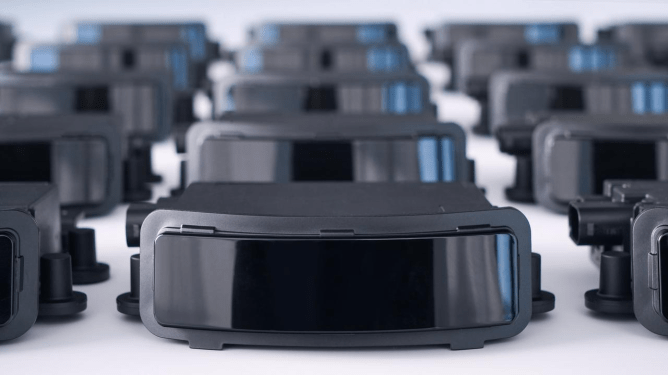
Chinese lidar maker Hesai announced plans on Monday to double its production capacity from two million units to four million units this year. This aggressive expansion aims to secure a dominant position in the global market for laser-based sensors. The new target represents a significant increase from the over one million units Hesai produced in 2025.
This push for greater market share follows the recent bankruptcy of leading U.S. lidar-maker Luminar, which filed for Chapter 11 just one month ago. Luminar is not expected to continue operations once its bankruptcy plan is approved, though it is seeking a buyer for its lidar business.
Hesai has raised hundreds of millions of dollars in recent years and is now publicly listed on both the Nasdaq and Hong Kong stock exchanges. This financial standing persists despite ongoing challenges with the U.S. government, which has accused the company of working closely with China’s military industry—a charge Hesai has actively contested.
At the 2026 Consumer Electronics Show in Las Vegas, Hesai attributed its ability to double production to accelerating demand from the automotive and robotics industries. The company’s automotive segment is particularly strong, buoyed by the Chinese car market’s adoption of lidar. Hesai reports its sensors are now in 25% of new electric cars sold in China, with many new vehicles expected to integrate between three to six lidar sensors each, significantly expanding the company’s addressable market. Hesai boasts 24 automotive customers, including a top European automaker, and holds four million orders for its newest ATX lidar sensor.
The automotive market has proven difficult for lidar makers outside of China, a key factor in Luminar’s downfall. While Luminar initially secured deals with Volvo, Polestar, and Mercedes-Benz, those plans unraveled. Volvo, for instance, had agreed to purchase 1.1 million sensors but ultimately bought only around 10,000, citing delays and cost overruns.
While not a guaranteed success, the robotics sector presents another promising opportunity for lidar. Other industry players, like San Francisco-based Ouster, believe robotics represents a $14 billion market opportunity encompassing humanoid robots, last-mile delivery robots, and military applications.
At CES, Hesai showcased a robotic lawnmower and a robotic dog utilizing its JT series lidar sensor and hinted at future inclusion in humanoid robots. The company also supplies sensors to autonomous vehicle companies such as Pony AI, Motional, WeRide, and Baidu.
A major industry shift Hesai highlighted is the drastic reduction in lidar sensor costs, which have fallen by 99.5% over the past eight years. This price pressure from China-based competitors like Hesai was regularly cited in Luminar’s bankruptcy filings as a primary reason the U.S. company struggled to build a self-sustaining business.