
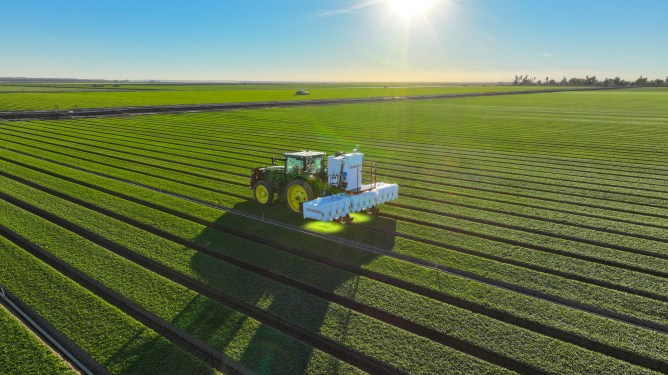
What is and isn’t a weed in a field is determined by the eyes of the farmer. Now, that judgment is increasingly aided by a new AI model from Carbon Robotics. The Seattle-based company, which builds a fleet of laser-wielding robots called the LaserWeeder, announced its new Large Plant Model on Monday. This model recognizes plant species instantly and allows farmers to target new weeds without needing to retrain the robots.
The Large Plant Model is trained on more than 150 million photos and data points collected by the company’s machines across more than 100 farms in 15 countries. The model now powers Carbon AI, the system that serves as the brains inside the company’s autonomous weed-killing robots.
Paul Mikesell, the founder and CEO of Carbon Robotics, explained that before this model, every time a new type of weed appeared on a farm, or even the same weed in different soil or with a slightly different look, the company had to create new data labels to retrain its machines. This process took about 24 hours each time. Now, the Large Plant Model can learn a new weed instantly, even if it has never seen it before.
Mikesell stated that a farmer can now operate in real time and simply instruct the machine to kill a new weed, a capability that did not exist previously. There is no new labeling or retraining required because the Large Plant Model understands at a much deeper level what it is looking at and the type of plant.
The company, founded in 2018, began developing this model shortly after it started shipping its first machines in 2022. Mikesell has years of experience building these types of neural networks from previous roles at Uber and while working on Meta’s Oculus virtual reality headsets.
This new model will reach the company’s existing systems through a software update. Farmers can then tell the machine what to kill and what to protect by selecting photos from the robot’s user interface.
Carbon Robotics has raised more than $185 million in venture capital from backers including Nvidia NVentures, Bond, and Anthos Capital. The company will now look to continue fine-tuning the model as its machines feed the Large Plant Model new data.
Mikesell said the company now has over 150 million labeled plants in its training set. With that volume of data, the system should be able to look at any picture and decide what kind of plant it is, what species it is, and what its structure is like, without having ever seen that particular plant before.