
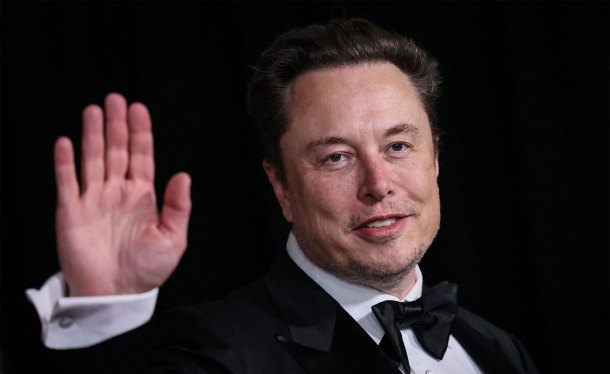
Thirty years ago, the names dominating industries like aerospace, energy, healthcare, mobility, and media would have pointed to General Electric. Today, those same sectors increasingly bring to mind Elon Musk. He is the CEO of Tesla, xAI, and SpaceX, the latter of which owns the telecoms company Starlink. He owns the social media platform X and is developing neural implants and underground tunnels. He has also directed at least ten million dollars toward fertility research. Musk appears to be merging several of these ventures into a single conglomerate.
Musk has frequently been compared to Henry Ford. A more fitting comparison might be to John D. Rockefeller or to Jack Welch, the leader who transformed GE from an ailing industrial firm into a sprawling conglomerate. The Welch comparison becomes especially relevant with rumors that Musk is attempting to merge some combination of SpaceX, xAI, and Tesla.
The similarities are not perfect. GE was a company, and Musk is a person. Yet that distinction blurs when his net worth eclipses the market capitalization of ninety-seven percent of the S&P 500. Musk’s net worth is approaching eight hundred billion dollars, nearly matching GE’s inflation-adjusted peak value. At its height, GE was often inseparable from its chairman, Jack Welch. Similarly, Musk captivates his peers. Executives today talk of being “hardcore” and espouse “first-principles thinking,” much like CEOs in the 1980s sought to emulate Welch through “accretive” mergers and mass layoffs.
Today, Musk’s empire spans Tesla, SpaceX, xAI, Neuralink, and The Boring Company, each with distinct goals. While there is some integration—Teslas drive through The Boring Company’s tunnels, xAI’s Grok is available in Tesla vehicles, and Tesla batteries supply xAI data centers—these companies largely operated independently until recently. That changed when SpaceX and Tesla made separate investments into xAI.
At one time, GE was the world’s most valuable company, with divisions making everything from light bulbs and jet engines to television shows. When Jack Welch took over in 1981, he inherited a company that had lost a fifth of its market value. His first move was to cut headcount, laying off over one hundred thousand employees in his first few years and earning the nickname “Neutron Jack.” He then used the savings to acquire company after company, some related to GE’s core manufacturing and others, like NBC, acquired to expand influence.
Welch was revered for his management, with rival CEOs emulating his style. Through relentless layoffs and acquisitions, he grew GE from fourteen billion dollars to over four hundred billion dollars. However, his approach had flaws. By the 2008 financial crisis, it was clear the conglomerate structure hid serious problems. Profits from GE Capital were used to cover poor performance elsewhere, and when GE Capital required a federal bailout, the model unraveled. GE eventually announced it would split into three separate companies.
Beyond Welch, Musk might be compared to figures from an even earlier era. Some see his story as more akin to the robber barons of the Gilded Age, like J.P. Morgan and John D. Rockefeller, who controlled powerful companies that built new industries. They wielded power through tremendous wealth and a lack of regulation, mixing and matching companies as they pleased. This approach, driven by ego and market power, may be a closer parallel to Musk’s strategy.
The wealth disparities are similar. Rockefeller’s wealth equaled a significant percentage of the United States’ total GDP, much like Musk’s wealth today. A key difference is the regulatory environment. The Gilded Age had almost no framework, while today’s world is more regulated, though some argue those constraints are being pulled back.
The future of Musk’s empire depends on his decisions—whether to merge his companies or keep them separate—and on how society responds to his growing influence. Like his Gilded Age predecessors, Musk has attempted to shape political outcomes, spending heavily to influence elections in the U.S. and abroad.
If Musk merges his companies, he will create a true conglomerate, a structure that has fallen out of favor. Conglomerates originally allowed investors to hedge risk across counter-cyclical businesses. However, this strategy was largely debunked, as investors often fare better with specialized, efficient companies. Finance experts note a well-known “conglomerate discount” where the whole is valued less than the sum of its parts.
Ultimately, the biggest constraint on Musk’s companies may be regulation, which is driven by public opinion. The tycoons of the past saw their power checked by new regulations introduced in the Progressive Era. Musk has a talent for embracing visionary futures and turning them into business plans. The question remains: how long will he be able to maintain his trajectory?