
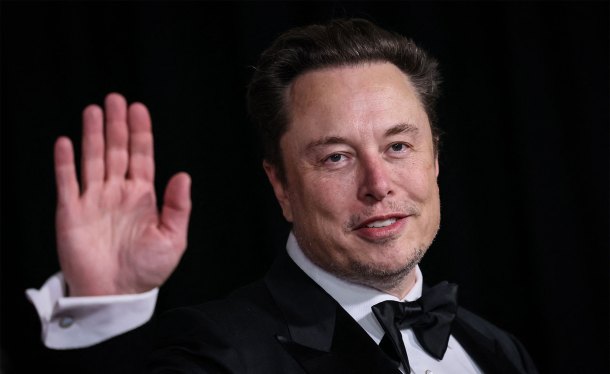
Thirty years ago, the industries of aerospace, energy, healthcare, mobility, and media would bring one corporate giant to mind: General Electric. Today, they point to a single individual: Elon Musk. He is the CEO of Tesla, xAI, and SpaceX, the latter of which owns the telecoms company Starlink. He owns the social media platform X. He is developing neural implants through Neuralink and underground transportation tunnels through The Boring Company. He has also directed at least ten million dollars toward fertility research. Recent reports suggest Musk is moving to merge several of these ventures into a single conglomerate.
Musk is often compared to Henry Ford, but a more fitting historical parallel might be John D. Rockefeller or Jack Welch, the leader who transformed GE from a struggling industrial firm into a vast, diversified empire. The comparison to Welch becomes especially relevant if Musk proceeds with rumored plans to merge SpaceX, xAI, and Tesla.
The similarities are not perfect, of course. GE was a corporation, while Musk is a person. Yet that distinction blurs when his personal net worth surpasses the market capitalization of ninety-seven percent of the S&P 500. Musk’s wealth is approaching eight hundred billion dollars, nearly matching GE’s inflation-adjusted peak value. At its height, GE was virtually synonymous with its chairman, Jack Welch. Similarly, Musk captivates his peers; modern executives adopt his language of being “hardcore” and using “first-principles thinking,” much like 1980s CEOs emulated Welch’s strategies of “accretive” mergers and large-scale layoffs.
Today, Musk’s empire includes Tesla, SpaceX, xAI, Neuralink, and The Boring Company—each with distinct goals. While there are some intersections, like Teslas using Boring Company tunnels or xAI’s Grok being available in Tesla vehicles, these companies have largely operated independently. That changed recently when both Tesla and SpaceX made separate, significant investments into xAI.
There was a time when GE was the world’s most valuable company, a true “everything company” with divisions making everything from light bulbs and jet engines to television shows. When Jack Welch took over GE in 1981, he inherited a company that had lost a fifth of its market value. His first major action was to reduce headcount, laying off over one hundred thousand employees in his early years and earning the nickname “Neutron Jack.” He then used the savings to acquire a long series of companies, some related to GE’s core industries and others, like NBC, acquired to expand the company’s influence.
Welch was revered for his management, and his training program was considered elite. Through relentless layoffs and acquisitions, he built GE into a financial powerhouse, growing its market value from fourteen billion to over four hundred billion dollars during his tenure. However, this model was not flawless. After he left, the 2008 financial crisis exposed critical weaknesses, particularly in the GE Capital division, which required a massive federal bailout. The conglomerate model ultimately unraveled, and GE announced it would split into three separate companies.
Some analysts suggest an even earlier historical comparison for Musk: the robber barons of the Gilded Age, like John D. Rockefeller and J.P. Morgan. These men controlled vast new industries through direct ownership and board influence, mixing and matching companies as they pleased. A professor at Harvard Business School notes that Musk’s approach seems more aligned with this model, centered on ego, market power, and being a kingmaker. Their power stemmed from immense wealth and a lack of regulation—conditions that bear some resemblance to today, given Musk’s wealth relative to the total U.S. economy and a perceived pullback in regulatory constraints.
The future of Musk’s empire will depend on his decisions—whether to merge his companies or keep them separate—and on how society responds to his accumulating influence. Like the tycoons of the past, Musk has attempted to sway political outcomes, spending hundreds of millions to influence elections in the U.S. and abroad.
If Musk creates a formal conglomerate, he would be reviving a structure that has fallen out of favor. Economists note that while conglomerates were once seen as a way to hedge risk, they often trade at a discount because they are inefficient and make it difficult to value the individual businesses accurately.
Beyond merger plans, the ultimate constraint on Musk’s companies may be regulation, which is driven by public opinion. The power of the Gilded Age barons was eventually checked by a wave of new regulations during the Progressive Era. Musk has a demonstrated knack for captivating the public imagination with visions of the future and turning them into viable businesses. The central question remains: how long can he sustain it?