
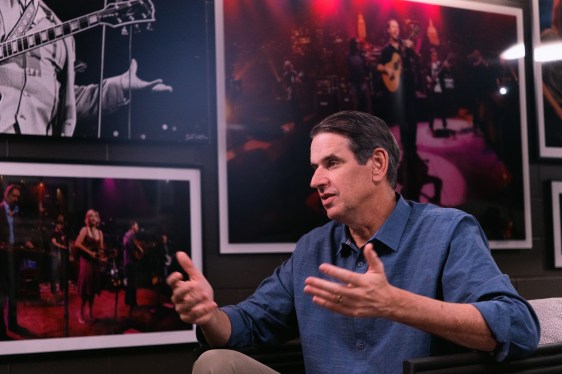
For nearly three decades, Bill Gurley has been one of the most influential voices in Silicon Valley. As a general partner at Benchmark, his early bets on companies like Uber, Zillow, and Stitch Fix helped define modern venture capital. Now, having moved to Austin and stepped back from active investing, the native Texan is channeling his pattern-recognition instinct into new endeavors: a book, a foundation, and a policy institute aimed at problems he believes he can actually move.
The book is titled “Runnin’ Down a Dream,” a nod to Tom Petty and an argument that following your passion is not just romanticized career advice but a genuine competitive strategy. This strategy becomes even more urgent as AI rapidly reshapes the workforce. The accompanying foundation, called the Running Down a Dream Foundation, will award 100 grants of $5,000 each year to people who need a financial cushion to make a leap they have been afraid to take.
Gurley discussed these projects, including his thoughts on former tech peers now holding enormous sway in Washington, the 996 work culture adopted by many young founders, and what AI truly means for your career.
When asked why he wrote the book, Gurley explained he noticed patterns while reading biographies from various fields and time periods. He wrote those patterns down and later built a presentation for a talk at the University of Texas. After the talk was posted online, author James Clear noticed it, which spurred Gurley to consider a book. As he moved away from venture capital, he decided against writing about that world and instead chose a project with a bigger mission.
Research conducted with Wharton found that roughly 60% of people would do things differently if they could start their careers over. This statistic shocked Gurley. He notes that when you are young, it is hard to have the framing that life is a use-it-or-lose-it proposition. He references work by Daniel Pink on regrets of inaction, the things people did not try, which weighs heavily across geographies and cultures. Gurley also observes that well-intentioned parents often prioritize economic stability over encouraging their children to explore their passion, a choice that may not have been the right call, especially with AI’s rise.
On the topic of pursuing passion being easier for those with financial runway, Gurley offers several points. First, the book profiles people who started from the very bottom. Second, for someone living paycheck to paycheck, he does not advise quitting immediately but rather using free time to learn and prepare. Third, this is the very reason for launching the foundation, to provide grants to those who have a plan but need help getting started.
Gurley has long been outspoken about regulatory capture, where big companies use regulation to entrench themselves. He expressed a fear that AI companies would attempt this, and believes it is now happening. While acknowledging legitimate concerns about technology’s impact, he is skeptical when the companies themselves beg for regulation. He also worries about a global dimension, where excessive U.S. regulation could hinder competition with Chinese models. He questions whether state-level regulators are equipped to write effective AI rules.
Regarding prominent tech figures now holding influence in Washington, Gurley finds it very ironic, noting that a former peer is now a special advisor in the White House.
On the topic of intense work cultures like the 996 system, Gurley says he kind of loves it. He felt Silicon Valley grew lazy during COVID, with a softening culture. Having visited China six times, he understands the concern about work ethic. However, he points out that society celebrates obsessive practice in athletes and artists, but not in company builders. If founders love what they are doing and feel it is their moment, that is precisely the book’s point: find what makes you feel that way.
Regarding mentorship, Gurley advises against the common approach of cold-calling someone unattainable. Instead, he suggests creating an “aspirational mentor” persona by studying their work. For a real mentor, he recommends aiming two levels down from your initial target, as they will likely be flattered by the request. He shares an anecdote about giving aspiring venture capitalists a homework assignment, which dramatically reduced the number who followed up, illustrating the importance of genuine effort.
Gurley started the book before AI’s impacts were fully clear. He believes AI changes how people should think about careers. For those on a traditional, mass-produced path, AI looks frightening. But for those blazing their own trail and becoming a “candidate of one” with a unique path, every tool in his book is amplified by AI. Learning has never been easier, and for those running toward AI and becoming the most AI-aware in their field, it is nothing but a superpower.