
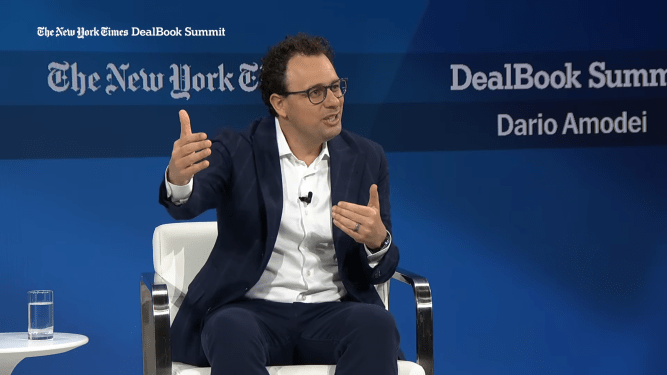
Anthropic CEO Dario Amodei shared his perspective on whether the AI industry is in a bubble during The New York Times DealBook Summit on Wednesday. He declined to give a simple yes-or-no answer, describing the situation as complex, and instead detailed his views on the economics of artificial intelligence.
Amodei described himself as bullish on the technology’s potential but cautioned that some players in the ecosystem might make a “timing error” or see “bad things” happen regarding economic payoffs. He explained that there is inherent risk when the timing of economic value is uncertain. Companies must take risks to compete with each other and with authoritarian adversaries, a reference to the threat from China, but he added that some are not managing that risk well and are taking unwise risks.
The core issue, he said, is the uncertainty around how quickly the economic value of AI will grow and properly aligning that with the long lead times required to build data centers. Amodei described a genuine dilemma that his company tries to manage responsibly. He expressed concern about other players who are “YOLO-ing,” a slang term for “you only live once,” by turning the risk dial too far.
He also addressed the topic of AI chip depreciation, another factor that could negatively impact the industry’s economics if GPUs become obsolete ahead of schedule. Amodei clarified that the issue is not that chips stop working, but that new, faster, and cheaper chips continually arrive, reducing the value of older hardware. He stated that Anthropic makes conservative assumptions on this front as it plans for the future.
The CEO revealed that Anthropic’s revenue has grown tenfold per year for the past three years, moving from zero to $100 million in 2023, then to $1 billion in 2024, and is projected to land between $8 and $10 billion by the end of this year. However, he said it would be “really dumb” to assume this pattern will continue, noting the uncertainty of whether revenue will be $20 billion or $50 billion a year from now. He plans conservatively for the lower side, which he finds disconcerting.
AI companies must plan how much computing power they will need in the coming years and how much to invest in data centers. Buying too little means they cannot serve customers, while buying too much could lead to a struggle with costs or even bankruptcy.
Amodei warned that those who take excessive risks could overextend themselves, especially if they are constitutionally inclined to “YOLO” things or simply like big numbers, a veiled reference to OpenAI CEO Sam Altman. This followed a recent public relations crisis at OpenAI, where its CFO suggested the U.S. government should backstop the company’s infrastructure loans, a comment she later walked back.
Amodei concluded by expressing confidence in Anthropic’s conservative approach, stating they think they will be okay in almost all possible scenarios, but noted he cannot speak for other companies.