
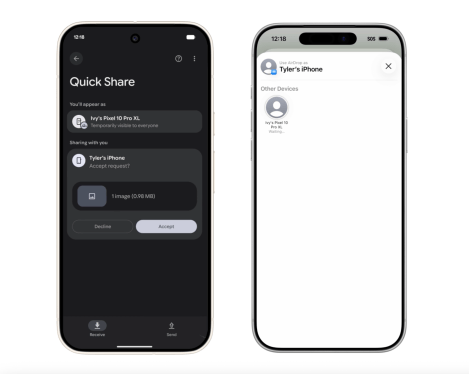
In a surprising but welcome move, Google has updated Quick Share to work with Apple’s AirDrop. This allows users to more easily transfer files and photos between Android and iPhone devices. The new functionality is first rolling out to the Pixel 10 lineup and works with iPhone, iPad, and macOS devices. Google plans to expand the functionality to additional Android devices in the future.
The company says this new feature lets users quickly share their photos, videos, and files without worrying about the kind of phone the other person uses. Currently, Quick Share works with AirDrop if the iPhone owner changes their settings to make their device discoverable to anyone using AirDrop’s “Everyone for 10 minutes” mode. The Pixel user will then be able to see the iPhone as an available device when selecting Quick Share.
Google explained that this implementation using the “Everyone for 10 minutes” mode is just the first step in seamless cross-platform sharing. The company welcomes the opportunity to work with Apple to enable the “Contacts Only” mode in the future. The tech giant says you can ensure you’re sharing with the right person by confirming their device name on your screen.
Google notes that the update allows for two-way communication. This means that iPhone users can send files to Pixel phones as well. The Pixel device will also need to be set as discoverable in order to receive a file.
The feature does not use a workaround, and the connection is direct and peer-to-peer, according to Google. This means that data is not routed through a server and that shared content is never logged. The company stated that it built this with security at its core, protecting user data with strong safeguards that were tested by independent security experts. They added that this is one more way they are bringing better compatibility between operating systems, following their work on RCS and unknown tracker alerts.
It is worth noting that Google’s announcement does not detail anything about how it worked with Apple to launch the new functionality. TechCrunch reached out to Apple for comment and will update if one is provided.