
A year ago, Redwood Materials did not have an energy storage business. Today, it is the fastest-growing unit within the battery recycling and materials startup. This growth is a direct reflection of the current boom in AI data center construction.
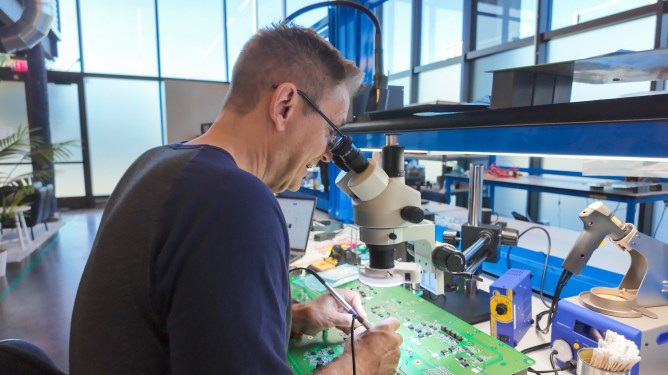
Evidence of this expansion can be found at the company’s research and development lab in San Francisco. The facility has grown four-fold into a 55,000-square-foot space and now employs nearly 100 people. While these figures are small compared to Redwood’s total workforce of 1,200 and its sprawling campuses in Nevada, the lab’s value and recent growth are tied directly to the burgeoning energy storage division launched in June 2025.
The San Francisco facility, which opened in April 2025, is where engineers integrate the hardware, software, and power electronics for energy storage systems. These systems are designed to power data centers, AI computing, and other large-scale industrial applications.
The company announced that this expansion will support a wave of energy storage deployments for data centers. A recent $425 million Series E funding round will provide the capital needed to scale the business. Google, as a new investor, and existing backer Nvidia joined the round specifically to support Redwood’s energy storage venture.
Claire McConnell, vice president of business development, stated that AI data centers have been a pressing area of focus. She added that there are other use cases for its systems, including supporting renewable energy projects like solar and wind.
While data centers have existed for decades, advancements in AI have spurred a construction spree and a massive need for reliable electricity. McConnell explained that data center developers are facing unprecedented challenges. When trying to connect to the electrical grid, they are being told it could take five or more years. At the same time, there is massive demand to build more data centers to compete in the AI race.
Redwood Materials was founded in 2017 by former Tesla CTO JB Straubel to create a circular supply chain for batteries. It initially focused on recycling scrap from battery production and consumer electronics, processing and selling materials to customers like Panasonic. The company also expanded into battery materials and today produces cathodes for battery cells.
The company launched Redwood Energy last summer to leverage the thousands of EV batteries it has collected through its recycling business. The goal is to provide power to companies. Redwood Energy’s first customer is Crusoe, a startup that Straubel invested in during 2021. Redwood set up an energy storage system using old EV batteries not yet ready for recycling. This system generates 12 MW of power with 63 MWh of capacity, sending electricity to a modular data center built by Crusoe.
McConnell said future customers in the pipeline include hyperscalers. These are companies that operate massive cloud computing data centers consuming hundreds of megawatts of power, far exceeding the capacity of the Crusoe project. She noted the company is working on projects in the hundreds of megawatt-hours and has others in the pipeline that reach multiple gigawatt-hours.