
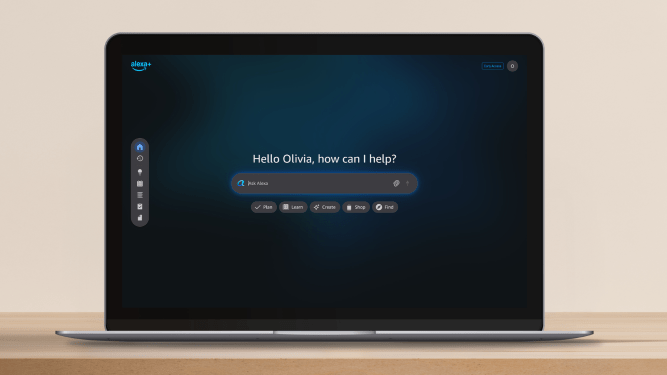
Amazon’s AI-powered overhaul of its digital assistant, now known as Alexa+, is coming to the web. At the start of the Consumer Electronics Show in Las Vegas, the company announced the official launch of a new website, Alexa.com, which is now rolling out to all Alexa+ Early Access customers. The site will allow customers to use Alexa+ online, similar to other AI chatbots like ChatGPT or Google’s Gemini.
While Alexa-powered devices, including Amazon’s own Echo smart speakers and screens, have a well-established footprint with over 600 million devices sold worldwide, Amazon believes that for its AI assistant to be competitive, it will need to be everywhere—not just in the home, but also on the phone and on the web. This expansion could later give anyone a way to interact with Alexa+, even if they do not have a device in their home.
Related to this expansion, Amazon is updating its Alexa mobile app to offer a more “agent-forward” experience. This puts a chatbot-style interface on the app’s homepage, making it seem more like a typical AI chatbot. While you could chat with Alexa before in the app, the focus is now on the chatting, while other features take a backseat.
On the Alexa.com website, customers can use Alexa+ for common tasks like exploring complex topics, creating content, and making trip itineraries. However, Amazon aims to differentiate its assistant from others by focusing on families and their needs in the home. That includes controlling smart devices, as with the original Alexa, but also doing things like updating the family’s calendar or to-do list, making dinner reservations, adding grocery items to your Amazon Fresh or Whole Foods cart, finding recipes and saving them to a library, or planning family movie night with personalized recommendations.
Amazon has been integrating more services with Alexa+, including the addition of Angi, Expedia, Square, and Yelp, which will join existing apps like Fodor’s, OpenTable, Suno, Ticketmaster, Thumbtack, and Uber. The Alexa.com website features a navigation sidebar for quicker access to your most-used Alexa features, so you can pick up where you left off on tasks like setting the thermostat, checking your calendar for appointments, and reviewing shopping lists.
In addition, Amazon aims to convince customers to share their personal documents, emails, and calendar access with Alexa+, so its AI can become a sort of hub to manage the goings-on at home. This includes tracking kids’ school holidays and soccer schedules, doctor’s appointments, and other family reminders. This is an area where Amazon will need to stretch, as it does not have its own productivity suite or the wealth of personal data that rivals like Google already have. Instead, Amazon has been relying on tools to forward and upload files to Alexa+ for its AI to keep track of. That will now be a feature available on Alexa.com, and the information you share can be displayed on the Echo Show’s screen, where it can also be managed. This ability to manage a family’s personal data could be Alexa’s biggest selling point, if it gets it right.
Daniel Rausch, VP of Alexa and Echo at Amazon, says that seventy-six percent of what customers are using Alexa+ for no other AI can do. He notes this statistic is interesting for two reasons. First, because customers count on Alexa to do unique things, like sending a photograph of an old family recipe to Alexa and then talking through the recipe as you cook, substituting ingredients for what you have at home. Second, another twenty-four percent are using Alexa to do things other AIs can do, which could indicate they are shifting more of their AI usage to Alexa+.
Alexa.com will initially only be available to Early Access customers who sign in with their Amazon account. Amazon has been steadily rolling out Early Access since its debut of Alexa+ early last year. Rausch states that over 10 million consumers now have access to Alexa+, and they are having two to three times more conversations with Alexa+ than they did with the original Alexa assistant. Specifically, they are shopping three times more with Alexa+ and are using recipes five times more than before. Heavy smart home customers also use Alexa+ fifty percent more for smart home control, compared with the original Alexa.
Across social media and online forums, there are complaints about Alexa+’s misfires and mistakes. But Rausch believes the complaints are over-represented online. He says that the number of people opting out of the Alexa+ experience after trying it is in the low single digits, on average, or effectively almost none. Ninety-seven percent of Alexa devices support Alexa+, and adoption shows customers are using Alexa across all those many years and generations of devices. Amazon supports all of Alexa’s original capabilities, and the tens of thousands of services and devices that Alexa was integrated with already are carried forward to the Alexa+ experience.