
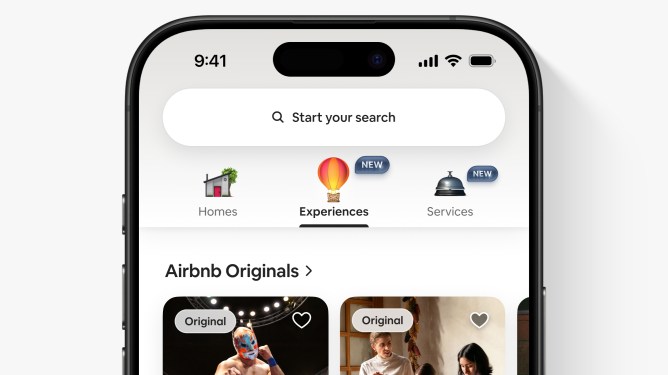
Airbnb reports that its custom-built AI agent is now managing approximately one third of its customer support issues in North America. The company is preparing to launch this feature globally. If successful, Airbnb believes that within a year, more than thirty percent of its total customer support tickets will be handled by AI through voice and chat across all languages where it also employs human agents.
Chief Executive Officer Brian Chesky stated that this development will be massive, as it not only reduces the cost base of customer service but also represents a huge step change in service quality. His comments suggest a belief that the AI could resolve some issues more effectively than human counterparts.
The company highlighted its recent hire of Chief Technology Officer Ahmad Al-Dahle, who was recruited from Meta for his AI expertise. With his guidance, Airbnb plans to create an AI-native experience. Chesky explained that the company is poised to introduce an app that doesn’t just search but one that “knows you.” This app would help guests plan entire trips, assist hosts in running their businesses, and enable the company to operate more efficiently at scale.
Chesky noted that Al-Dahle is a leading AI expert with sixteen years at Apple and experience leading the generative AI team at Meta that built the Llama models. His expertise in pairing technical scale with design is seen as key to transforming the Airbnb experience.
Airbnb’s leadership argues that the company possesses a unique database and product that other AI chatbots cannot replicate. Chesky pointed out that a generic chatbot does not have access to Airbnb’s 200 million verified identities, its 500 million proprietary reviews, or the ability to message hosts, which ninety percent of guests utilize. Instead, he described layering AI over the existing Airbnb experience as a way to accelerate growth.
The company forecast revenue growth in the low double digits this year. This follows a fourth quarter where it pulled in 2.78 billion dollars, above estimates of 2.72 billion dollars. For the current quarter, Airbnb expects revenue between 2.59 billion and 2.63 billion dollars, which is also above Wall Street forecasts.
When investors raised concerns about AI platforms potentially moving into the short-term rentals market, Chesky pushed back. He emphasized that Airbnb is not just a consumer app but also includes the host app, customer service, and protections like insurance and user verifications, built over eighteen years. The platform handles more than 100 billion dollars in payments.
Chesky also noted that AI chatbots serve a function similar to search by delivering top-of-funnel traffic, which he said converts at a higher rate than traffic from Google. This shift, he suggested, would benefit Airbnb.
The company is already using AI to power its search feature, which is currently enabled for a very small percentage of traffic as it experiments with more conversational search. Later, Airbnb plans to integrate sponsored listings within search.
While other companies have shared detailed metrics on internal AI use, Airbnb offered a high-level view. The company stated that eighty percent of its engineers now use AI tools, and it is working to increase that adoption to one hundred percent soon.