
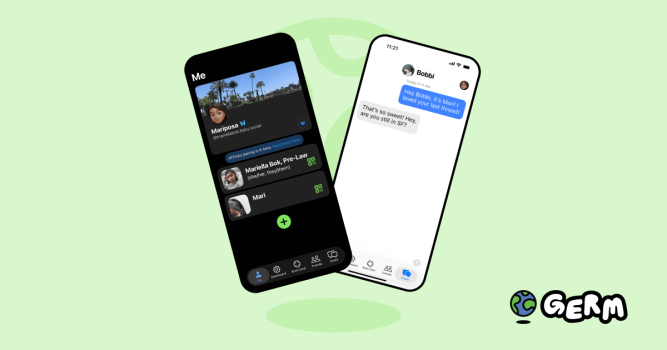
Something new is appearing on the decentralized social network Bluesky. The platform has integrated technology from the startup Germ Network to bring end-to-end encrypted messaging directly into the Bluesky app. This makes Germ DM the first private messenger that can be launched natively within Bluesky.
Alongside this launch, Germ is releasing new guidance that would allow other apps built on the underlying AT Protocol, which powers Bluesky, to implement similar encrypted messaging features.
This move is a notable example of how open social networking ecosystems operate differently from today’s dominant Big Tech platforms. New functionality can be developed by the broader community, not solely by the company that operates the main app.
Bluesky announced the integration with Germ earlier this month. The experimental feature allows Germ users to add a button to their Bluesky profile so others can message them in an end-to-end encrypted environment.
Meanwhile, Germ’s standalone app is also available in a public beta on iOS in North America and Europe. That app had seen thousands of downloads, but after the official integration announcement, daily active users jumped by five times.
California-based Germ is a startup founded by Tessa Brown, a communications scholar who previously taught at Stanford, and Mark Xue, a former privacy engineer at Apple who worked on technologies like FaceTime and iMessage. The company aims to offer an alternative to other encrypted platforms like iMessage, Signal, and WhatsApp by building on newer technologies.
Germ utilizes Messaging Layer Security, a new standard approved by the Internet Engineering Task Force, and the AT Protocol, which powers Bluesky and other social apps. Instead of requiring a phone number, Germ integrates with ATProto to enable its encrypted chats. This means Germ’s messages cannot be decrypted by another service, including itself or Bluesky.
To use the new messenger, you click on the badge on a friend’s Bluesky profile. This opens a lightweight iOS App Clip. After clicking “open,” you authenticate by logging in with your ATProto handle and can then send a message immediately. You are also nudged to download the full Germ DM app, but this is optional.
To add the badge to your own profile, you download the Germ DM app on iOS and authenticate your Bluesky credentials there.
The company has been building toward this official Bluesky integration for many months, starting with a private beta in August that used “magic links” shared in user bios. The new badge replaces that link-in-bio option.
Germ has been in conversation with the ATProto developer community, including Bluesky’s teams, since last year. The changes to Bluesky’s app were led by its head of product, Alex Benzer, as the company experimented with implementing third-party services.
While the AT Protocol could eventually implement its own end-to-end encryption, that is not a current focus. Bluesky protocol engineer Daniel Holms noted that encryption is inherently complex and that complexity would extend to every developer trying to build a client for the protocol.
Shortly after Bluesky added support for the Germ badge, another AT Protocol-based client, Blacksky, did as well.
The Germ team is currently focused on shipping more everyday messaging features rather than monetization. Further down the road, the startup may test paid features centered on the needs of professional power users, such as support for multiple handles and AI-powered screening for first messages from new connections.